Tuesday, 30 June 2015

Local Dragons, Damsels and Nightjars - Saturday 27th June 2015

I was having busy day on Saturday 27th June, but found myself with a couple of opportunities to check out a couple of local sites, which I thought I'd share with you, if only to show there's more to my birding life than just twitching ;-)

Early afternoon, in between the weekly shop and putting up a new tent (to test it), I bought a salad and popped to Denso-Marton Nature Reserve in Baildon to have my dinner. The weather was beautiful and seemed an opportunity I shouldn't waste. Denso is lovely little reserve, and particularly good for bugs - something I've been getting interested in a lot more recently.

Azure Damselfly, Denso-Marston Nature Reserve, Baildon - Saturday 27th June 2015

Large Red Damselfly, Denso-Marston Nature Reserve, Baildon - Saturday 27th June 2015

Large Red Damselfly (with moth prey), Denso-Marston Nature Reserve, Baildon 
Saturday 27th June 2015

 Banded Demoiselle (female), Denso-Marston Nature Reserve, Baildon - Saturday 27th June 2015

Iris Sawfly, Denso-Marston Nature Reserve, Baildon - Saturday 27th June 2015

Small China-mark Moth, Denso-Marston Nature Reserve, Baildon - Saturday 27th June 2015

Later that day, after the tent-checking and the washing and and the picking up kids and the BBQ, etc, my friend Joel, aka @Cleckbirder, got in touch about going looking for Nightjars. A great idea - the perfect weather for it.

We went to a site I knew near Otley, arriving around 21:30. I'd been here twice this year already, without success, but still had high hopes for the site. We had a roding Woodcock before we were barely out of the car, and at least one other passing over repeatedly later.

The Nightjars started churring around 22:00, one distantly at first, then another very close. The churring stopped and restarted a little over to our right. In the twilight, Joel picked out a a tell-tale shaped silhouetted in a bare tree: the male Nighjtar churring away. We could see its head moving from side to side and hear the corresponding changes in the churring song.

Nightjar, Otley, West Yorkshire - Saturday 27th June 2015

Two females then flew right over our heads, seemingly coming from a field of grassy pasture behind us. At one point the churring male stopped briefly and dropped a couple or branches down the tree. A hunting Tawny Owl passed over it, and the Nightjar resumed it's position and restarted churring.

Tuesday, 23 June 2015

Cretzschmar's Bunting, Bardsey Island, Gwynedd, Wales - Sunday 14th June 2015

One of the most enjoyable and pleasant twitches I've ever experienced. The Cretzschmar's Bunting was pretty spectacular, not least because of its rarity value, but also because it has cracking plumage. But add to that a "lively" boat crossing to the beautiful island of Bardsey; some fantastic weather; some good chat with other birders; and that ace feeling you have when you end up somewhere completely different to where you'd planned when you got up that morning... and you have yourself a near-perfect day out.

Cretzschmar's Bunting, Bardsey Island, Gwynedd, Wales - Sunday 14th June 2015

The bird had initially been seen and photographed near the Bardsey Bird Observatory, around the middle of the island, on 10th June; and then again on the 12th, towards the south of the island. Birders of the first boats (on the evening of Friday 12th and the morning of Saturday 13th) all drew a blank. It seemed as though it may have moved on almost as soon as it had arrived.

But then at 08:07 on Sunday 14th news came through of a "Cretzschmar's Bunting - male still singing at south end from 06:00 but elusive and skittish", with additional information: "...boats leave Porth Meudwy (if there is demand) at 12:30 and 13:30 (1st come, 1st served, £150 for boat if fewer than 5 people or £30 per person if more) - do not enter hay fields, gardens or lighthouse compound."

I smiled at the phrase "if there is demand". There'll be demand all right! But it wasn't until an hour later when a second message came through confirming the bird was at the lighthouse - and still singing - that I decided to go. I had just enough time to get the 13:30 boat...

After first going to the wrong beach (Aberdaron), I parked at the NT car park above Porth Meudwy at 12:50 and headed down the ravine. I was surprised to find only four birders waiting. They were relieved to see me, as there were now five of us, so their trips would only cost £30 each rather than £150. By the time Colin Evans arrived with his empty fishing catamaran there were exactly twelve of us - a full quota. It turned out most of the people on the boat had been over for the previous day's dip. They weren't exactly local either, with one couple having set off from Nottingham at 10:00 that morning.

Colin took our names and told us that twelve birders had already gone across at 12:30, and he'd heard that the bird was still showing occasionally. The pressure was building. Close, so close... The weather was lovely and the Irish Sea looked flat as we set out. Then Colin put his foot down and we blasted towards Bardsey. As we cleared the Llŷn Peninsula we hit the choppier waters of Bardsey Sound and most people on the boat got completely drenched :-)


The tide was low, so Colin couldn't get near the landing slipway on Bardsey. He excellently manoeuvred the boat into a gap about three inches wider than the boat itself and we all clambered out on to the seaweed-covered rocks. A quick yomp up to the lighthouse, a jostle for position, and everything was set...


Apparently, the bird was showing every hour or so and had been showing as we'd landed, so we wouldn't have to wait long... Having been to see birds that were "just showing a few minutes ago", but never reappeared, my inner tension was building. After a few minutes we were told the bird was showing on the other side of the lighthouse, and those of us from the 13:30 boat could go round and see it. Off we raced, silently, looking like clumsy paratroopers with all our gear. And of course, the bird flew round the back of the wall before any of us could see it...

But ten minutes later, back round the other side, the Cretzschmar's popped up on to the wall and then down on to the seed amongst the Sea Thrift. What a beaut!

At first, just the bird's blue-grey head was viewable above the flowers. The large dark eye with the thick pale ring was really clear, with a rusty-buff area above the lores. The rusty-buff formed the moustachial stripes and throat patch too. It pecked at the seed then lifted its head up slightly above the horizontal when chewing, looking both nervous and pompous at the same time. The bill was a pinkish colour, with the lower mandible looking quite orange especially when backlit by the sun.

The bunting eventually moved to where we could see it properly. The mantle was a lovely pattern of black feathers with broad rusty edges (or rusty feathers with black centres). The flank and belly were a strong coppery orange. Just describing it now reminds me of how fabulous it looked.

All too soon it flew back around the lighthouse, while we all breathed, smiled and patted each other on the back. We were all still corralled in the same spot, waiting for it to reappear, when the warden call us over from the seaward side of the lighthouse again. A quick scarper round and the bird was showing - and singing - in a wild rose by the wall, and then down in the nettles. Here it stayed for a few minutes as a another boat load of birder arrived. A nice bonus Black Redstart showed well on the wall in the bright sunshine too.

A few minutes later we had our most prolonged views back in the lighthouse compound. When the bird flew this time, I caught a great view of the bird's back - all black and coppery stripes. Lovely. Then it was time for most of us to clear off and allow the new arrivals to get a good look.


I doubled-checked with the warden that the boat was definitely £30 for the round trip, and not each way (boatman Colin hadn't collected any money on the way out). The warden and some of the others chuckled and shook their heads like I was stupid (thanks). But earlier Colin had told us the Obs was short of dosh, and wanted to put as much in the donations bucket as possible without being stranded on the island. I had £61 on me, so was it to be £1 or more? What I put in was definitely worth it, and must have doubled what was already in there (stingy buggers).

I had a lovely walk back to the quay, then up towards Mynydd Enlli and back, though unfortunately I missed the Thrift Clearwing moths that were apparently on the wing.

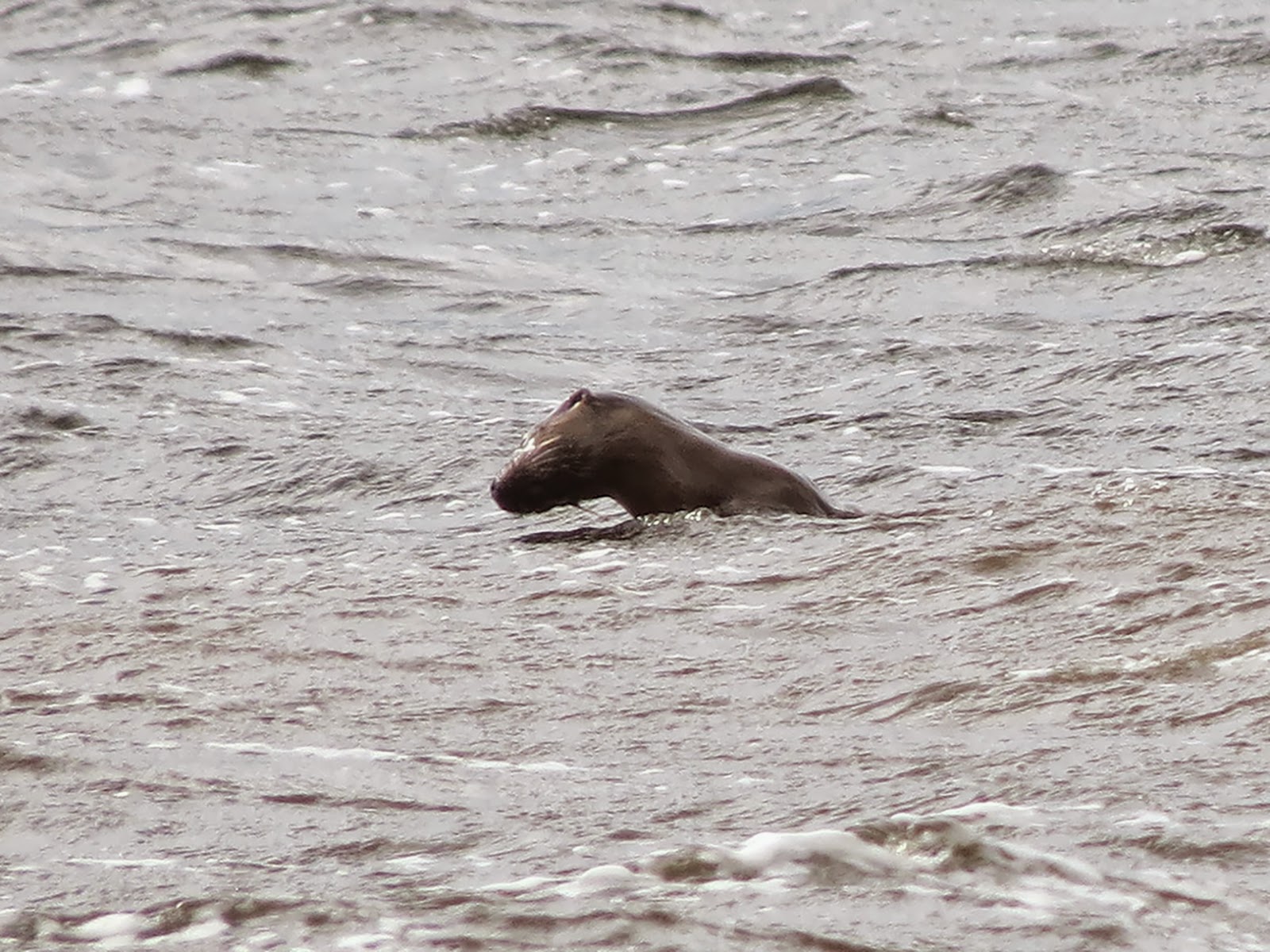
Atlantic Grey Seal, Bardsey Island, Gwynedd, Wales - Sunday 14th June 2015

Northern Wheatear, Bardsey Island, Gwynedd, Wales - Sunday 14th June 2015

Our lift home

The boat trip back across Bardsey Sound was an enjoyable one, made even more so by the teams of Manx Shearwaters fliying along side the boat. An absolutely ace day out. A wonderful, beautiful place - certainly want to visit again.


I'd actually started the day at 07:00 at Rodley Nature Reserve, helping with the monthly BTO WeBS count. The weather here was overcast with the odd spot of drizzle, and the birds were quiet. I'd picked out a couple of Rooks with a small flock of Carrion Crows on some distant overhead wires; only my third and forth Rooks ever at Rodley. These would count nicely towards my Patchwork Challenge 2015 total, and for a while I thought they'd probably be the best birds of the day!

Rook, Rodley Nature Reserve, Leeds - Sunday 14th June 2015

I'd also picked up a couple more Patchwork Challenge points in the form of a Little Ringed Plover on the wet grassland (so much better when the water level is low) and a Garden Warbler. And to think, I would have been happy going home with just that. ;-)

Thursday, 18 June 2015

Hudsonian Whimbrel, Pagham Harbour, West Sussex - 10th June 2015

Another in a long line of American vagrants in Britain this spring, this Hudsonian Whimbrel (a rare visitor to the UK with only eleven previous records) was found on the 9th June by George Kinnard (well done fella!). It took less than 24 hours for twitching fever to kick in, and I juggled my commitments around a bit and headed south from work late the following morning.

I arrived in Church Norton to sunny but cool and windy weather, and with the news that the bird had flown to the north of the harbour out of view, and hadn't been seen for around 2.5 hours...

The wait for it to (hopefully) show again wasn't too anxious. This was mainly because there was plenty of confidence in the few people who were present (far fewer than I'd expected, though it's a big site, so there may have been more I didn't see) that the bird hadn't gone far and it would soon be back once the tide came in.

Of course, the easiest way to pass time on a twitch is to actively look for the bird you'd come to see. Seriously, you won't believe the number of people who don't do this, but instead they stand around, chat, and stare at their phones. There were plenty of Eurasian Whimbrels and Eurasian Curlews around to pick through, as they were moved on from feeding on the sand into the cord-grass by the rising tide.

Each had to be checked, firstly to rule out Curlew (easy, but more difficult when some birds were in long grass a kilometre away) and then to check for the pale face and stronger pattern of the Hudsonian Whimbrel. Some of the birds occasionally flew, and all had white rumps. Well, occasionally it would be difficult to tell because of the angle and the strength of the light. I thought I had a good pale-faced candidate in one area, which frustratingly I couldn't nail the rump during a very brief fight.

I was feeling increasingly hungry, and after three hours I buckled and popped back to the car for ten minutes to pick up some grub. Of course, as I walked back the message came in the bird had been seen! Typical! I rushed back and was told it was seen in the same small area that I'd had my distant "candidate". No one could tell if the bird had just flown in or was picked out from those already present, so I had no idea of the likelihood of it being the same bird I'd picked out.

I couldn't see the bird at first, but eventually it took a flight which other Whimbrels and the speckled brown rump was clear to see. I could now check the face and it was clearly paler, with a bolder median crown strip and eye stripes. The bird made three more flights while I watched, including an extended one up the harbour and back again, coming closer this time.

I got some excellent views, though the same cannot be said of my photos. Three completely useless ones are reproduced below - you'll have to trust me when I tell you it's the brown shape in the middle. Instead, I'd recommend googling for some proper photos of this bird.

Hudsonian Whimbrel (trust me), Pagham Harbour, West Sussex - 10th June, 2015

It was well worth the trip to get good views of a truly rare bird in the UK.

As I left, I noticed the birder I'd been stood with was waiting at a bus stop. I went back and offered him a lift - he was heading to Havant, pretty much on my route home. I was pleased to find out he was Barry Collins, who had found the Semipalmated Plover at Hayling Island I'd twitched in 2013, amongst many others (inlcuding finding 44 Kentish Plovers in his time!). Respect!

Friday, 15 May 2015

Red-throated Pipit, Ludworth Moor, Chisworth, Derbyshire - Monday 4th May 2015

A cracker of a bird, with the added interest (to me) of being found around just a few miles from where I grew up.

Red-throated Pipit, Chisworth, Derbyshire - Monday 4th May, 2015

It was found by John Raines of nearby Hazel Grove on Sunday 3rd May. So, despite having low expectations it had stayed, I got over early on Monday morning to help in the search. Around 7:30am, while I was picking through Meadow Pipits and Skylarks a couple fields away from Gun Hill Road, I noticed birders running along the road. Someone had heard or seen it.

We all piled along the tarmac, stared into the sun and attempted to pick out the bird from the Meadow Pipits hiding among the tussocks. Finally the Red-throated Pipit gave itself up. Such a striking and beautiful bird.


Red-throated Pipit, Chisworth, Derbyshire - Monday 4th May, 2015

The bird had a plain rusty-red face, throat and upper breast, and a streaky crown. It had an unmarked off-white belly, whereas the flanks were gleaming white, with clear dark streaking. The mantle was also streaked, with two clear pale braces down the back (not unlike the Pechora Pipit I saw on Unst last year).


Red-throated Pipit, Chisworth, Derbyshire - Monday 4th May, 2015

I was a joy to see such a fine example of this species, and so well. And to get a lifer too, of course... ;-)

Thursday, 14 May 2015

Hudsonian Godwit, Meare Heath, Someset - Saturday 2nd May 2015

The one that didn't get away! This lovely American wader looked like being a one-day wonder, but eventually reappeared to give late-comers like me a chance to see it.

Hudsonian Godwit, Meare Heath, Somerset - Saturday 2nd May, 2015

It was originally found by Tom Raven on the Meare Heath part of Shapwick Heath NNR on the evening of Friday 24th April; but he understandably took time to check out the ID before releasing the news. Fortunately it was still present the following morning and Tom released the news early. Only the third for Britain - what a great find!

The bird stuck around until 16:15, giving birders from all over the country time to get there before it flew off. Unfortunately, I had house jobs and family commitments all day, plus I was leading an RSPB event the following day, so I wasn't likely to get to see it. I heard there were lots of disappointed birders on site the following morning; whereas I was at home preparing for the guided walk, just glad not to have made a wasted trip.

More RSPB duties meant I was at Leighton Moss on Wednesday 29th, when the bird reappeared at Meare Heath. Would it stay until the weekend? Probably not... So it was with some trepidation that Joel and I parked up at Shapwick around 06:15 on Saturday 2nd May and walked the short journey to Meare Heath. Plenty of birders present. Was it there...? Well, of course it was, or I wouldn't be writing this or putting these fantastic* photos on my blog (* sarcasm doesn't really work on the web, does it?).

The flock of 114 Black-tailed Godwits were sleeping at the back of the scrape. And there at the back of the group, mostly obscured from view, was a darker bird with its head tucked in - the Hudsonian Godwit. It was clearly different (though I knew it was there and what it was - so I'm not dissing the finder), but it when the flock was spooked that it really stuck out. Such a dark bird, black underwing, with a darker head, neck and breast, and barring all the way to the tail. It had a black tail with the white base, similar to the Black-tailed Godwits, and was roughly the same size, but otherwise it stuck out like a sore thumb.


Hudsonian Godwit, Meare Heath, Somerset - Saturday 2nd May, 2015


When feeding its darker appearance was also very striking, the barring giving it the appearance of an over-sized Stilt Sandpiper.

There was an abundance of otherwise difficult-to-see birds on show too. A Bittern, booming out in the open was a rare treat.

Bittern, Meare Heath, Somerset - Saturday 2nd May, 2015


Further treats were the several Great White Egrets, including a nice side-by-side comparison with a Little Egret, circa twelve Cetti's Warblers that we heard and occasionally saw, decent Garden Warbler views, hunting Marsh Harriers, singing Cuckoos, first Swifts of the year, and lots more besides.

Great White Egret, Meare Heath, Somerset - Saturday 2nd May, 2015

Marsh Harrier, Meare Heath, Somerset - Saturday 2nd May, 2015

The Hudsonian Godwit stuck around all weekend, being seen last on the evening of Sunday 3rd May, before the godwit flock left over night, presumably heading north towards Iceland.

Wednesday, 6 May 2015

Leighton Moss - Wednesday 29th April 2015

I had a day off work on Wednesday 29th April, which I spent at RSPB Leighton Moss. Not because I had any particular urge for a day out birding there, but to attend a Child Safeguarding course - one of the conditions of my role as a leader of a RSPB kids wildlife explorer group, called Airedale Otters.

Of course, there wasn't anything stopping me checking out the reserve before and after the course, especially as a Pied-billed Grebe was being reported regularly from the Lower Hide. So I arrived nice and early and made my way down to the Lower Hide, being greeted by some of the tamest birds I'd ever met.

Female Mallard, Leighton Moss, Lancashire - Wednesday 29th April, 2015

Female Common Pheasant, Leighton Moss, Lancashire - Wednesday 29th April, 2015

Male Common Pheasant, Leighton Moss, Lancashire - Wednesday 29th April, 2015

I'd visited here a few times as a child, as it was one of the nearest RSPB reserves to where I grew up, and had never been disappointed. As soon as I set foot on the reserve I heard a Cetti's Warbler singing from cover, at the top of the causeway - not a bad start. Unfortunately, a windy hail storm blew up soon after, and so the Goldcrests and Reed and Sedge Warblers were all singing from deep cover too. Most things were. I got some decent views of a Marsh Harrier hunting over the reeds, but the birds were quiet and hidden, and I only had limited time.

I arrived at the Lower Hide, and the only occupant told me the Pied-billed Grebe was showing well just to the right. Only, it had just dived and hadn't yet resurfaced. Ninety minutes later and it still hadn't resurfaced... Ah well.

It wasn't all wasted time: I'd had some great views of hunting Sparrowhawk, more Marsh Harrier action, fantastic displays of hirundines over the water, and plenty of calling warblers (Reed, Sedge, Willow, Blackcap, Chiffchaff, etc). I had to leave for my course, and thought I'd head back down afterwards.

I arrived back at the hide around 16:30 to be told the star bird hadn't show all day. Ho hum. Fortunately, it wasn't a lifer (for that, see my first ever blog post), so I wasn't too downhearted, plus there was an Otter feeding straight out from the hide. I've seen lots in Scotland, but I can't ever recall seeing an Otter in England (I've found plenty of spraints!), so I spent most of the next hour or so watching it.

It was busy diving and hunting for the whole time, putting in so much effort, making very hard to photograph. It was underwater for most of the time. The glossy sheen of its wet fur made it look more like a fish than mammal, as it twisted in the water, only occasionally breaking the surface. Whatever it was catching must have been small. Everything was chewed and gulped down in a couple of seconds. It didn't bringing any prey to the shore, as I've seen in Scottish sea lochs.


European Otter, Leighton Moss, Lancashire - Wednesday 29th April, 2015

As the sun crept lower, I called in at Lillian's Hide. A group of 30 Black-tailed Godwits flew in and started feeding at the back. I checked them for the Hudsonian Godwit that had been in Somerset at the weekend (at this point, with my phone out of juice, I didn't know it had returned). There were a couple of Avocets on the furthest island, and a small party of Ruff were feeding in the shallow water to my right. The highlight was this fantastic male Garganey, dabbling away in the sunshine to the left of the hide. My best and most prolonged views of this species.


Male Garganey, Leighton Moss, Lancashire - Wednesday 29th April, 2015