Wednesday, 6 November 2013

Sardinian Warbler - Mire Loch, St Abbs Head, Borders, Scotland - Sunday 27th October 2013

My wife's been so busy of late that I've been practically the sole parent of our children over the last few weekends. This has meant for some fun - but very tiring - times. And for very little birding or twitching. So I took the whole of half term off work, hoping to spend some quality time with the family and get some birding in. As ever, I didn't get out to do much birding during the week, but did squeeze in this fine day of twitching…

On Sunday 27th I left home some 2.5 hours before dawn, to arrive at St Abbs Head NR, Borders, Scotland, around half-an-hour after sunrise. I was after a male Sardinian Warbler - a real looker from the photos I'd seen. I'd received some great on-site directions via Twitter and needed to get to the car park at the starting point of those directions. But, the gate to the reserve appeared locked, so I parked outside the reserve and walked up to the car park on the far side of the reserve. Turns out the gate wasn't locked - it just looked that way - so I had added around an hour to my trip… Ah well, I did have a lovely walk through this dramatic reserve.

I took the long route...

When I got to the bushes, I found there were five of us early-risers looking for this bird. A couple of the guys had already seen it early doors, giving me hope that it would soon show again. The weather was so lovely - bright, sunny, still, cold but warming up - which added to my optimism. The bird was apparently favouring the sycamores, birch, blackthorn and gorse, rather than the nearby pines; but you could tell what it was favouring when it was completely out of view and off the radar for 99% of the time?

 Just a handful of people looking for this bird

There were a few other birds in the area: Chiffchaff, Blackcap (which give us some raised heartbeats on a couple of occasions), Goldcrest, Robin, etc, with Redwing, Fieldfare, Reed Bunting, and Yellowhammer occasionally alighting higher in the trees. As I waited I watched the tumbling Ravens over the loch and picked out a beefy-looking Peregrine glide stealthily overhead.

Before long the Sardinian Warbler popped up, although I missed it the first time - I was checking another area. Once I'd got my eye in, I got great views. The striking white throat of the bird really stood out against the black hood and gunmetal-grey of the mantle. The tail was often cocked while the bird perched on a favoured birch branch, where it was often stationery. The red eye-ring was very clear. The bird showed well three times while I was there, and I only left because the weather was turning wet. A real cracker of a bird, making me annoyed with myself for damaging my camera in Kent the the previous week.

This is a species I've seen before, but only in Spain in 2010, while on holiday with the family. I did manage some photos of Sardinian Warblers then, though not of a male.  Not an easy bird to photograph in deep cover - here's my best digiscoped attempt of a female from that holiday.

Sardinian Warbler (female) - Orgiva, Spain, 11th June, 2010

There are some good shots of the St Abbs Head / Mire Loch bird here, here and here.

As I travelled home the rain eased and I decided I'd try Hartlepool Headland for the Western Bonelli's Warbler, again. The rain may have gone, but the wind was now up - this was at the time of the southern "Great Storm". I managed to scan every tree, bush and shrub in the gardens and park and see absolutely nothing, just as the other birder on site had said I would. God know how the the bird found later (well after I'd got home).

I did have the consolation of getting good views of this Glossy Ibis in nearby Hartlepool, in a flooded paddock at the end of Valley Drive. Some iphonescoped attempts in high wind…

Glossy Ibis - Hartlepool, Sunday 27th October 2013

Wednesday, 30 October 2013

Sweaty-palmated Plover

Semipalmated Plover, Hayling Island, Hampshire - Sunday 20th October 2013

A nice bird this one and often called a "birder's bird", on account of it being difficult to distinguish from Ringed Plover, especially in first-winter plumage. Personally, I think Ringed Plovers are fantastic birds, and a day comparing them and their nearest relative sounds great. A nice bird, and a rare one too: there are currently only three accepted records from the UK (Scilly Isles and two from Devon), plus a further two from Ireland with another pending. A nice bird, and a world tick for me too.

Semipalmated Plover (with Ringed Plovers), Hayling Island - Sunday 20th October 2013

A wider shot showing the Semipalmated Plover (front centre) with the Ringed Plover flock

The obvious difference between the Semipalmated and Ringed Plovers was the size. The Semi-P was smaller and slimmer. This was accentuated by the smaller bill, something which really helped when looking for it through the younger Ringed Plovers. The plumage was subtly different too. There was an absence of the black found on the larger birds, the white neck band appeared thinner, and there were contrasting white fringing on the primary coverts. The main ID feature for me, on close views, was the difference in the lores. The white on the young Semipalmated Plover extended above the gape line (i.e. over the top of the line of the bill). Unfortunately I didn't get good views of the legs or feet, or hear it call, but there were plenty of feature on show for a positive ID.

This bird had been found by Andy Johnson - well done! On the day I was there we had a nervous wait first thing, as the tide came in at Black Point. Some Ringed Plover came to the high-tide roost on the spit, but their American cousin was definitely not with them. At midday we all headed for the beach on the southern shore, and to everyone's relief, there it was - in a mixed roost of Sanderling, Dunlin and Ringed Plover. The flock was quite flighty, thanks to waves, spray, high winds, and an uncontrolled terrier (dog-walkers, please get a grip).

Early morning at Black Point, Hayling Island - Sunday 20th October 2013

Relief all round as the bird is found on the southern beach on Hayling Island
Sunday 20th October 2013

I'd encountered a lot of rain as I travelled through Hampshire, and the weather was pretty crazy as I arrived on the island itself around 08:00am. Fortunately, both me and the Semi-p avoided the tornado…

I decided I'd make another attempt at some Two-barred Crossbills (my fifth attempt this year, at a third site). Big mistake. As I arrived at Hemsted Forest the heavens opened. I saw some type of Crossbills in flight distantly in the rain, along with some Chaffinches, but nothing. I stuck it out for as long as I could - even the hardly Lee Evans gave up before me - but it was a waste of time. The worst bit was finding my bag, and my camera, were completely full of water. The camera hasn't worked since... Bugger.

Thursday, 17 October 2013

Lightning Shrikes Twice - Wednesday 16th October 2013

I had a quick trip over to Flamborough Head yesterday, after hearing of all the good birds it was pulling in. Olive-backed Pipit, Rustic Bunting, "Daurian" Isabelline Shrike, to name just a few. Some strong south-easterlies were forecast too, which meant the birds present might stay and possibly be joined by others…

The target for me was the Isabelline Shrike. A fist-winter Daurian Shrike, Lanius isabellinus isabellinus, to be precise. I'd dipped one of these last year, and a bit like the Brown Shrike last month, was eager to get it back. I arrived at dawn and quickly teamed up with three very helpful Cleveland birders: Keith, Colin, and John - cheers guys. None of us were sure quite where the bird was last seen, but fortunately three local birders did and they pointed out the gardens to us. And there flitting around the gorse, brambles and fencing, was the shrike.

A was a very active, flighty bird, rarely staying in view for long. It frequently leapt acrobatically into the air like a flycatcher, to catch a bee and then land on a different perch. With each leap the long red tail showed nicely. It also seemed to to spend a fair amount of its time chasing off other birds, defending its food source. The bird's uppers were a faint brown, tinged grey perhaps mostly from the overcast conditions. It had a dark grey mask (perhaps more like a faded black), which was predominantly behind the eye. I would have preferred a closer view, but understandably, none of us wanted to peer to closely into people's gardens. A cracking bird nonetheless.

The flighty-ness of the bird, the overcast weather, the working days it's been present, and the distance it was showing, all probably add up to a good reason why there are so few photos of the bird (I didn't get a shot either).

I later dipped Olive-backed Pipit at Old Hall Plantation, and not through lack of trying - 3.5 hours of trying… Plenty of Goldcrest, Chiffchaff, Redwing, Sparrowhawk, and the odd Brambling in the meantime though. Also, the Rustic Bunting at nearby Millennium Wood proved to too elusive (or already in a different county/country) for me and the dozen or so birders trying to find it. The sort-of pay off was nice views of Yellowhammer and several overflying Fieldfare.

A nice day in the field, with a lovely lifer too.

I don't like writing blog posts which don't include pictures, so here's one from this week. It's a spore print my daughter made from a Honey Fungus that my son found on Sunday, while on a Fungi Foray with the kids wildlife group I co-lead: Airedale Otters. Nice, isn't it?

Honey Fungus Armillaria sp

Monday, 30 September 2013

Living the dream...

After Friday's excitement with the Brown Shrike and the long drive home, I wasn't sure I'd be out of bed and at Bridlington in time for my scheduled boat trip next morning. In the end the lure of the coast was enough, and I was on the quayside watching Purple Sandpipers on the sea wall by early morning.

Bridlington Bay - Saturday 21st September 2013

I was joined by my friends Sue Gale and Andy Kisby, and we managed to claim the best seats on the Yorkshire Belle. But, this didn't help much when there aren't many birds about... A few Razorbills, Guillemots and Puffins were the main players, with a few gulls as background noise. Two distant Great Skuas were a brief blip of excitement, with the odd Arctic, Common and Sandwich Tern adding some colour.

The biggest talking point was a potential adult Yellow-legged Gull which was seen circling the boat. I saw it from underneath well - it clearly had yellow legs and a clean, unstressed head. On the water, we could see the bird with its darker grey wings, but most people (including the spotters) were struggling to get on to it. When they did, much debate ensued until we all realised the bird we were looking at now was different to the one we saw earlier...

After a while, the Fulmars started to show close in - these are always a joy to see - but there was little of real interest until a few minutes from the end. An eagle-eyed punter spotted a close-in Red-necked Grebe on the sea. Very nice. We turned back for a closer look and everyone got to see the lovely bird close up. A nice adult moulting into winter plumage.

Red-necked Grebe, Bridlington Bay, East Yorkshire - Saturday 21st September 2013

The westerly breeze put us off the idea of hedge-bashing on Flamborough Head, so we settled on a trip to Filey Brigg for a reported Yellow-browed Warbler. We weren't disappointed. The little sprite - one of my favourite species - was on the seaward (and leeward) side, in very non-Yellow-browed habitat. A real cracker.


Yellow-browed Warbler, Filey, North Yorkshire - Saturday 21st September 2013

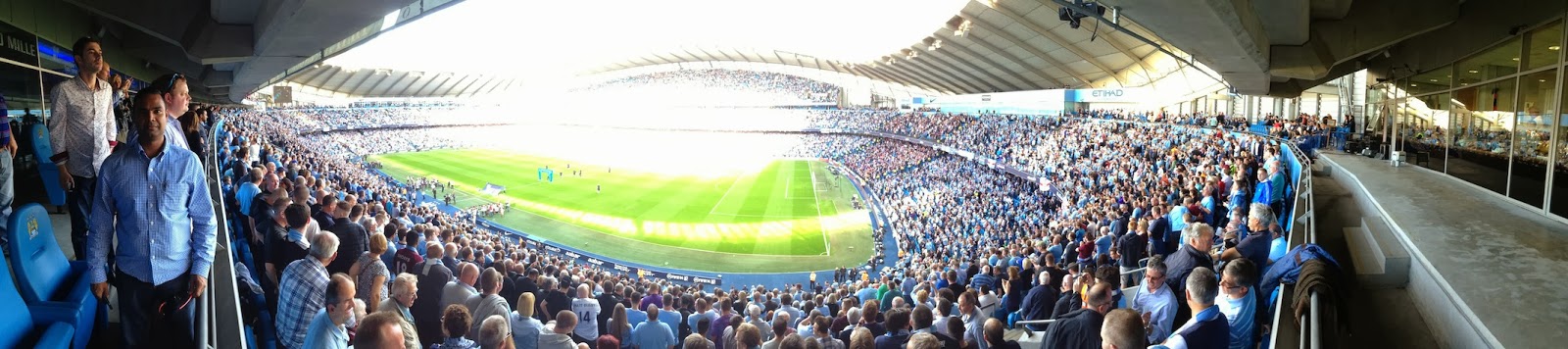
I'd earmarked the following day for birding too, but when you're offered a free ticket to the Manchester derby, playing at home, in a box with free booze and food, and a pitch tour and freebies, etc, you don't say no. Did I mention it was free? Anyway, City were great, Utd were pathetic (I'm being kind), and we won 4-1. The perfect end to a great few days.

The view from the posh seats...

Blue Moon...

Friday, 27 September 2013

Lightning Shrike - Friday 20th September 2013

Brown Shrike, Hook-with-Warsash, Hampshire - Friday, 20th September 2013

Two-barred Crossbills have become a proper bogey bird for me, but I'm happy to say I'm not bothered. The reason is simple: Brown Shrike!

I've spent a fair few hours at Broomhead reservoir near Sheffield over three or four visits trying for these. I decided the ones at Lynford Arboretum were more reliable (and nearer the Wilson Phalarope I needed at Cley), so headed down to Norfolk on 20th September. I spent a very pleasant six hours watching Common Crossbills, happy to wait off their two-barred cousins to show. Which they didn't. But then the pager said "Possible Brown Shrike, somewhere in Hants, way down south". Brown Shrike, eh? Now that's a bird...

I wasn't going to go for a "possible", especially with all the Red-backed Shrikes around, so I waited anxiously for an hour until Twitter provided the confirmation. It was a first-winter Brown Shrike, a bird at the top of my dip list.

So, it was 2pm and I was already down south in Thetford (I'm a northerner, so even Norfolk is down south) and Hampshire couldn't be too far away, could it?

I arrived at Hook-with-Warsash (where the hell was this place?), and tried to find some on-site directions... LGRE's 2013 year-list challenger John Jennings rocked up next to me, equally clueless. A nice old lady with a dog sorted us out and we were soon
marching towards the coast. The light was fading (it was around 18:30 by I got there), and people were leaving the site (in fact, there were far fewer birders than I'd expected - maybe all the locals had seen the 2010 Surrey bird - see below).

We were directed down to the coastal path, and there five or so birders helped pick out the young Shrike on the fence by the brambles. Phew - the demeanour of the first birders I'd met on site had caused me to worry the trip had been in vain.

You could see why someone would think it was a Red-backed Shrike at first, but those Brown Shrike features we're told to look for were all there. The tail was long and red, the bill deep, the crown a nice rich brown. The deep eye-stripe/mask was a very dark brown. The feathers all had brown edging on the breast - there was no grey on this bird at all. It looked "cuter" than a RBS - a very nice bird indeed.

 Brown Shrike, Hook-with-Warsash, Hampshire - Friday, 20th September 2013

The light was good when I first arrived, and the bird was easy to see, but it soon became dark and difficult to photograph.

 Brown Shrike, Hook-with-Warsash, Hampshire - Friday, 20th September 2013

There is a deep satisfaction when finally seeing a rare bird which you'd wasted many cold and boring hours looking for unsuccessfully in the past. This was very much the case here. I'd dipped the long-staying Brown Shrike at Staines, near Heathrow, in January 2010. I'd not gone for it the previous autumn, but decided to try for it on 2nd January after it had been refound on the 1st. I was travelling down to London to visit friends and took a "quick" detour to add it to my life list. Of course, when I got there it had gone to ground, and six hours of looking didn't turn up anything more than many Stonechats. It was never seen again (and it was some time before I saw my London friends again too, after letting them down). So getting this one - just - was very sweet.

This Hampshire Brown Shrike wasn't seen the following day, despite many people looking. There were a few false alarms and another bird appeared on Shetland; but this one had gone. I sympathise with the birders you dipped the following morning, particularly the long-distance travellers. I've done it myself with this and other species, and I'm sure I'll do it again. It's a crap feeling, but all the better when you finally get the bird.

The irony is I now have Two-barred Crossbill on my "birds-I've-wasted-hours-looking-for" list. Should be sweet when I finally nail that one though... ;-)

Thursday, 19 September 2013

Leach's Storm-petrel, Leasowe, Merseyside - 16th September 2013

I've been told plenty times that to see Leach's Strom-petrels off the west coast, you need the winds to be just right. You need a good 24 hours worth of strong westerlies in the middle of September to push the birds towards the west coast. Also, the wind must keep up during the passage, and visibility out at sea must be bad. Plus, you must close your vantage point wisely: northwesterlies and New Brighton is the place; southwesterlies mean go to Hoylake; anything in-between and Leasowe should do. Oh, and make sure you are there at high tide.

All these variables, combined with work and family and other commitments, have meant getting there at the right time has failed me in the past. But not this year. This year I managed to make the dash across country after work to be at Leasowe in filthy weather, sustained high winds, and on a rising tide. And the Leach's Storm-petrels came flying past south just like buses…

 Leach's Strom-petrel (Oceanodroma leucorhoa), Leasowe, Mersetside - 16th September 2013


I had five of them in the two hours I was there. The first had perfect plumage features - really handy when looking through a hand-held scope in 70mph gusts. The pale bars on the wings were so clear, and the white rump was clearly bisected by a dark line. I couldn't clearly see the forked tail, but the larger size (than European Storm-petrel), the longer, pointier wings, the shearing flight action added up to a positive ID.

Te second was even better - the forked tail clear to see. I was joined by Secret Twitcher and third bird came along the shoreline. This one seemed smaller and more rounded in wings and tail, with less defined wing markings. I wondered about it being a European, although it did look very brown and the rump wasn't extensive enough. What do I know? The fourth and fifth birds were closer in, as the tide was week up by then.

Fantastic little creatures, appearing strong and hardy, yet so slight and vulnerable. The way they dance over the surface of the roiling sea, dangling their stick-like legs in the foam, was a joy to watch. Like that bracing, sea-tossed journey to Inner Farne (also post-work) to see another ocean wanderer the Bridled Tern in July, this was a great, atmospheric, memorable trip.

Wednesday, 18 September 2013

Great Snipe, Kilnsea, East Yorkshire - 15th September 2013

A lovely, confiding, handsome bird - this Great Snipe showed well at the southern end of Beacon Lane, Kilnsea from late Saturday 14th to late Monday 16th.

 Great Snipe (Gallinago media), Kilnsea, East Yorkshire - Sunday 15th September 2013

And some video...


When I arrived around 08:15 on Sunday morning, the bird was roosting in the driveway of Warrenby Cottage. It soon perked up and fed in the garden. The Great Snipe spent most of its time in the ditch on the opposite side of Beacon Lane, seemingly very happy.

Unfortunately, the Spurn Obs Twitter feed announced on Tuesday 17th September that the bird had been found dead and was probably killed by a cat. Before long BirdForum went into it's usual cycle of debate: Blame the cat > kill all cats > hey, I've got a cat, don't blame them, blame wind farms > no, blame humanity > no, blame the Great Snipe > LGRE didn't see it, he's blaming twitchers > blame LGRE! Personally, I blame cats.

This Great Snipe was nice grip back after narrowly missing the last one at Spurn on 5th September 2010. I had just arrived for my first stay at the Observatory, sharing a room with Ray Scally. Ray suggested we go to the pub, then spend the following day birding Spurn together. Great idea, I thought, and while he went off for a shower (saying, "Let's swap phone numbers later"), I drove down to the Point to watch the sun go down. Ray never reached the shower… Someone ran into the Warren to say a Great Snipe had been found outside! Everyone present went out and got good views and photos as it was flushed, flying towards Sandy Point, never to be seen again. Except, I wasn't present. I was starting the car, and heading off to the Point, blissfully unaware (Ray didn't have my number…).

So, yeah, it was nice to see this one, and get such good views. And the fact it was a stone's throw from the one I dipped almost three years to the day made it extra sweet.

Afterwards, I had a walk up the coastal path at Easington. Not much around, apart from the the odd migrating Wheatear and a Common Seal pup. Here are some photos to make you go "aww..." (taken with a 35x zoom from some distance away).

Common Seal (Phoca vitulina), Easington, East Yorkshire - Sunday 15th September 2013